Safety Regulator to come under new govt control to battle housing delays
The government is set to bring the Building Safety Regulator under new control as part of a major reform to clear backlogs in planning High Risk Buildings (HRBs)

Currently administered by the Health and Safety Executive (HSE), the regulator will become part of a new arms-length agency under the Ministry of Housing in the wake of widespread industry criticism. The body will be chaired by former London Fire Brigade Commissioner Andy Roe with fire enforcement specialist Charlie Pugsley as chief executive.
A new fast-track process will also be introduced to help achieve the government’s house building targets, alongside increased investment to fund a projected 100 additional staff members.
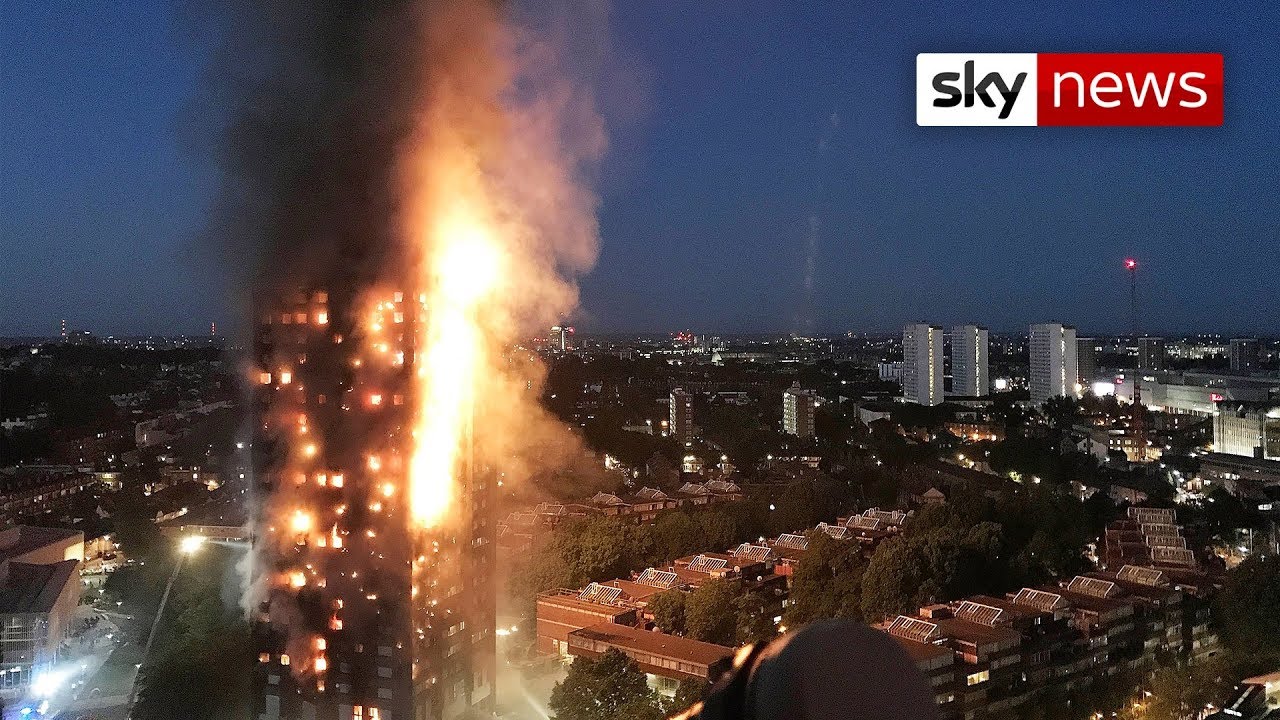
These changes are designed to pave the way for the creation of a single construction regulator, as was recommended by the Grenfell Tower Inquiry.
Building safety minister Alex Norris, said: ‘We’re announcing a package of reforms to the BSR today to enhance operations, reduce delays and unlock the homes this country desperately needs – delivering on our Plan for Change.
‘The establishment of the Building Safety Regulator has been fundamental to centralising safety in the construction process and it’s time to take the next steps to build on that precedent and create a system that works for the sector while keeping residents and their safety at the heart of the process.’
The government has emphasised its goal of delivering 1.5 million safe, high-quality homes and these latest reforms come at a time of severe delays to planning applications, especially for HRBs.
HSE chair Sarah Newton said: ‘Setting up an entirely new regulator has been complex and huge progress has been made in a short space of time.
‘Protecting residents and making sure there is never another tragedy like Grenfell has been our priority throughout this process. We wish the new BSR team well in this most important mission.’
Campaign group Architects’ Action for Affordable Homes (AA4AH) responded to the news, saying: ‘We welcome the government’s recognition that the BSR must work more effectively to deliver safe, high-quality homes. A proportionate, predictable system that is well resourced and efficient is essential to maintain safety standards while supporting the delivery of affordable, well-designed housing.
‘The reforms must build trust with communities and provide certainty for the sector’
‘Clarity and simplicity must replace the current logjam, which is holding back too many people from accessing the safe, affordable homes they need. A laser focus is needed on achieving a clear, straight forward and reliable process that works for residents and the industry alike.
‘We urge ministers to ensure that the reforms provide predictability, build trust with communities, and provide certainty for the sector, without creating unnecessary delays or costs.’
Geoff Wilkinson, managing director of Wilkinson Construction Consultants, told the AJ that the reforms currently lacked critical detail and make ‘no sense’ as they stood.
He asked: ‘Why is this announced before the Lords panel or the Hackitt Inquiry Panel have a chance to report?
‘Will all housing now go through BSR or just HRB? This might just mean that gateways for HRB are opened for the big developers but resources are taken away from small ones.’
The latest news comes after the HSE recently reduced the required level of building inspectors allowed to work on (HRBs) in a controversial move also intended to speed up the application process.
Although leading industry figures expressed support for changes which they hoped would speed up a planning process currently mired in delays, some experts feared the changes may come at the expense of competency.
In a change made to the code of conduct for Registered Building Inspectors (RBIs) earlier this month, class 2C and 2F inspectors can now carry out permissible work on HRBs being assessed by thr regulator.
This lowers the level originally required for inspectors to do this work, which was previously stipulated Class 3 at minimum.
Wilkinson raised concerns that decision could reduce the overall level of building safety regulation, and may have been made in a rush to get more housing blocks delivered, potentially disregarding the post-Grenfell philosophy that led to the BSR being set up.
‘This is exactly how we ended up in this mess in the first place’
He said: ‘This is exactly how we ended up in this mess in the first place – by allowing building inspectors without the necessary skills, knowledge, experience and behaviour to oversee high-risk projects.’
It is also unclear what real impact this will have on the process. Michael Bailey, associate director at Fulkers Bailey Russell, pointed out that class 2 RBIs may be functionally unable to work on the majority of HRBs.
He said: ‘In our experience in most cases work which meets the definition of “building work” affects the passive or active fire safety measures (such as fire doors, fire rated walls, smoke alarms etc) in the building. This makes the work Category A and outside the new scope of Class 2C and 2F RBCIs.
‘This would mean that Class 2C and 2F RBCIs would only be permitted to work on a small number of very minor applications.
‘[It] is unlikely the changes will make a meaningful impact on the BSR’s challenges in determining building control applications in the statutory time frame.’
A recent study by Fulkers Bailey Russell revealed that just 2.4 per cent of applications are approved in the statutory window, a situation which prompted the advisory firm to urge the government to create a new ‘fast track simplified pathway for minor building work’.
Earlier this year it emerged Philip White, who has ben at the HSE for 40, was set to leave his role as director of the Building Safety Regulator (BSR) to take partial retirement amid widespread criticism of the current application process.
He remains in the role of chief inspector of buildings and will continue for two to three days a week to support the transition to an executive agency.
White is the second head to retire since the BSR was set up in 2022, after the surprise departure of previous chief, Peter Baker, who stepped down in May 2023.
The BSR has recently been at the centre of criticism from the Association of Construction and Quality Professionals (ACQP), which last week had called for the regulatory body to be removed from the HSE.
The ACQP cited structural and cultural incompatibilities that are undermining the ability of the BSR to deliver the post-Grenfell reforms intended by the Building Safety Act.
What's Your Reaction?